How to Prevent Rust on Your Car During Bangalore's Rainy Season
Bangalore's rainy season can be tough on vehicles. Frequent showers, wet roads, standing water, mud, road dust, and moisture can expose different parts of a car to conditions that encourage corrosion. While rust may not appear immediately, prolonged exposure to moisture can gradually affect the underbody, chassis, wheel arches, doors, seams, and other vulnerable areas.
Many car owners focus on washing and polishing the visible exterior while overlooking areas underneath the vehicle. However, protecting these less-visible components is an important part of long-term car maintenance. This is where 3M Anti-Corrosion Treatment can play a role in protecting vulnerable areas against moisture and environmental exposure.
Why Does Rain Increase the Risk of Rust?
Rain itself is not the only concern. Water can collect with mud, road grime, pollutants, and other contaminants underneath a vehicle. When these materials remain trapped around metal surfaces, they can keep those areas damp for extended periods.
The underbody is particularly exposed because it comes into direct contact with water and debris thrown up by the road. Wheel arches, chassis components, seams, and other exposed sections can also accumulate moisture and dirt.
Over time, repeated exposure can contribute to corrosion, especially when protective surfaces have been damaged or worn.
Why the Car Underbody Needs Attention
The upper portion of your vehicle receives regular cleaning because it is visible. The underbody is often forgotten.
During monsoon driving, water and mud can reach areas that are difficult to inspect during a normal wash. Road debris can also become trapped around wheel arches and underneath the chassis.
This means a car can appear clean from the outside while its less-visible metal components are experiencing continuous exposure to moisture.
Regular inspection and appropriate protection can help address this overlooked part of vehicle maintenance.
What Is 3M Anti-Corrosion Treatment?
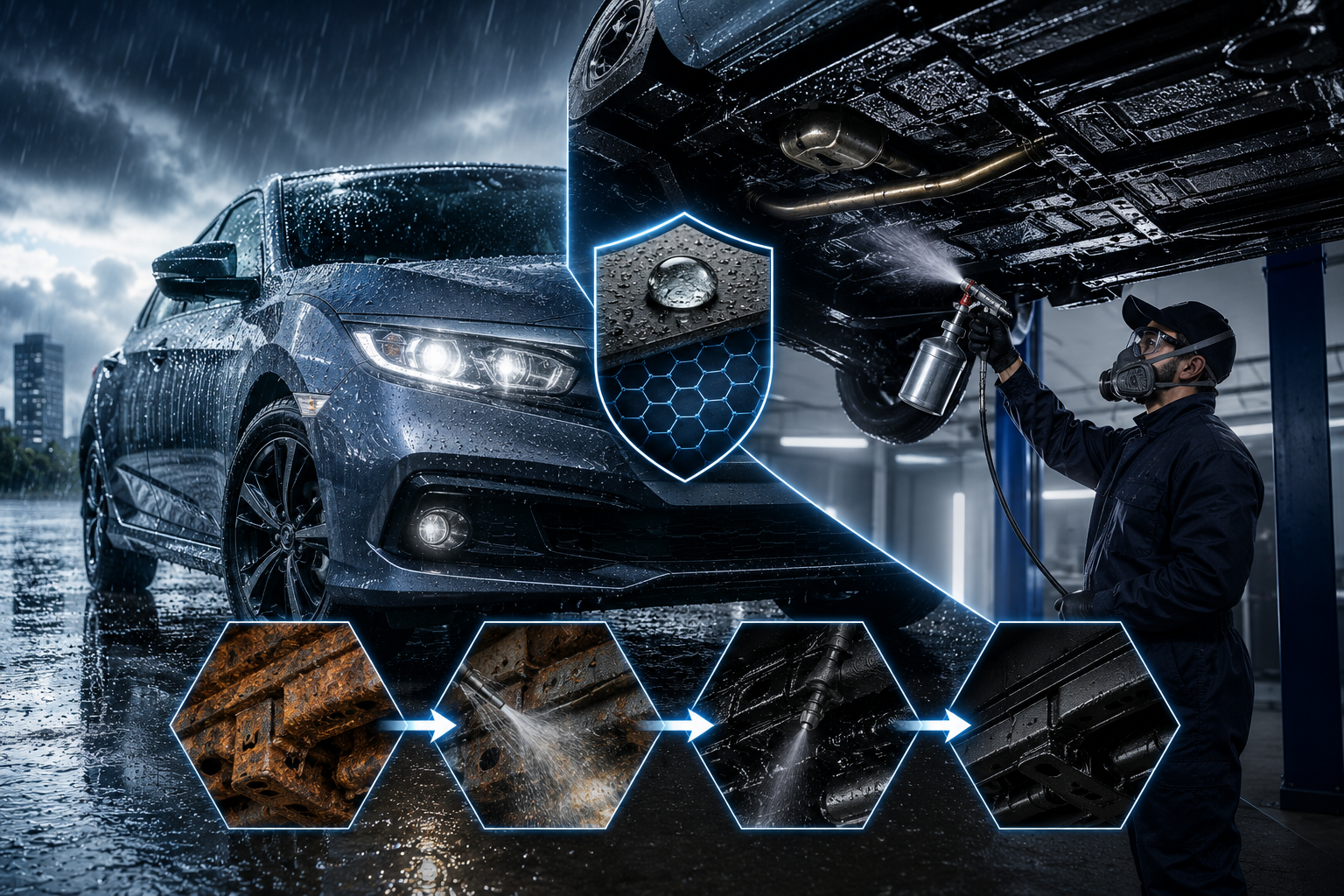
3M Anti-Corrosion Treatment is a protective service designed to help safeguard vulnerable vehicle areas against rust and corrosion. According to 3M Car Care Studio Bangalore, the treatment is intended for areas including the underbody, chassis, wheel arches, doors, and seams, creating a protective barrier against moisture, salts, and environmental contaminants.
The purpose is preventative. Instead of waiting for visible rust to develop and then dealing with repairs, vehicle owners can consider protective treatment as part of their maintenance routine.
The suitability of the treatment can depend on the vehicle's condition, age, usage, and existing corrosion.
How Does Anti-Corrosion Protection Help During Monsoon?
A protective layer can help reduce direct exposure of vulnerable surfaces to moisture and contaminants.
This is particularly relevant for cars that are regularly driven through waterlogged roads, muddy streets, or areas where road grime accumulates quickly. By protecting exposed areas, the treatment can form part of a broader strategy for maintaining the vehicle's underbody and chassis.
3M Car Care Studio Bangalore states that its anti-corrosion treatment is designed to protect the underbody and exposed areas and help extend vehicle life while reducing the impact of moisture, salts, and pollutants.
However, anti-corrosion protection is not a substitute for addressing existing mechanical or structural problems. Any significant rust or damage should be professionally inspected.
Which Parts of the Car Are Most Vulnerable?
Rust can develop wherever metal is repeatedly exposed to moisture and contaminants. The underbody is one of the most important areas to monitor, but it is not the only one.
Wheel arches can collect mud and water. Door seams and edges can retain moisture. Chassis components may be exposed to water and road debris. Small damaged areas in protective coatings can also become potential entry points for moisture.
Because many of these areas are difficult for owners to inspect regularly, professional assessment can help identify areas requiring attention.
Don't Ignore Small Signs of Corrosion
Early signs of corrosion can sometimes appear as small discoloured patches, bubbling surfaces, flaking protective layers, or reddish-brown marks around exposed metal.
Ignoring these signs may allow corrosion to progress.
It is important to distinguish surface contamination from actual corrosion. A professional inspection can help determine whether an area simply needs cleaning or whether it requires further treatment or repair.
Preventative maintenance is generally easier to manage than waiting until corrosion becomes extensive.
Regular Washing Still Matters
Anti-corrosion protection should work alongside normal car maintenance.
During the rainy season, washing the vehicle regularly can help remove mud, road grime, and other contaminants. Particular attention should be given to the underbody and wheel arches when safe and appropriate.
After driving through heavily muddy or waterlogged areas, removing accumulated contamination can help prevent it from remaining in contact with vulnerable surfaces for long periods.
Keeping the vehicle clean also makes it easier to notice early signs of corrosion.
New Cars Can Benefit From Preventative Protection Too
Rust prevention is not only relevant to older vehicles.
A new car may have factory-applied protective measures, but its underbody and exposed components will still encounter Bangalore's roads, rain, dust, and moisture throughout its life.
Considering additional protection early can be part of a preventative maintenance strategy, particularly for owners who expect to keep their vehicle for many years.
Similarly, used-car owners can consider an inspection to determine whether additional protection is appropriate based on the vehicle's current condition.
Why Professional Application Matters
The effectiveness of an anti-corrosion service depends on appropriate preparation and application. The surface should be inspected and cleaned before treatment so that dirt, moisture, and existing issues are properly identified.
Professional technicians can also determine which areas require attention and apply the treatment according to the service process.
3M Car Care Studio Bangalore states that its trained technicians apply the treatment to critical components such as wheel arches, underbody areas, doors, and seams.
Professional application can therefore be useful when the objective is comprehensive coverage rather than simply applying a product to easily accessible areas.
How Often Should You Consider Anti-Corrosion Protection?
There is no single schedule that applies to every vehicle.
The appropriate timing can depend on factors such as driving conditions, vehicle age, exposure to water and mud, parking environment, existing protection, and the condition of the underbody.
Vehicles that frequently travel through flooded or muddy roads may require closer attention than cars primarily driven on clean urban roads.
A professional inspection can help determine whether the vehicle needs treatment, maintenance, or simply routine cleaning.
Can Anti-Corrosion Treatment Help Preserve Vehicle Value?
A well-maintained vehicle is generally easier to keep in good condition over the long term. Corrosion can affect both appearance and, when severe, the condition of metal components.
3M Car Care Studio Bangalore lists maintaining vehicle resale value among the stated benefits of its anti-corrosion treatment.
While no treatment can guarantee a particular resale price, preventative maintenance can form part of a broader effort to preserve the vehicle's condition.
A Simple Monsoon Rust-Prevention Routine
Car owners can take several practical steps during Bangalore's rainy season. Wash away mud and road contaminants regularly, pay attention to the wheel arches and underbody, avoid allowing standing water to remain around the vehicle, and inspect exposed areas for early corrosion.
If you notice bubbling paint, reddish-brown patches, or recurring corrosion around specific areas, get the vehicle inspected instead of simply covering the affected area.
For vehicles exposed to frequent moisture and road contamination, professional anti-corrosion protection can complement these everyday maintenance practices.
Final Thoughts
Bangalore's rainy season can expose vehicles to repeated moisture, mud, road contaminants, and standing water. While rust may begin in areas that are difficult to see, early prevention can help reduce the risk of corrosion becoming a larger maintenance problem.
3M Anti-Corrosion Treatment is designed to protect vulnerable areas such as the underbody, chassis, wheel arches, doors, and seams from moisture and environmental exposure.
For car owners, the best approach is to combine preventative protection with regular washing, inspection, and timely maintenance. If your vehicle is frequently exposed to Bangalore's monsoon conditions, a professional assessment can help determine whether anti-corrosion treatment is appropriate.
Protecting the areas you cannot easily see can be just as important as maintaining the parts of your car that are visible every day.
Frequently Asked Questions
Why does rain cause rust on cars?
Rain increases moisture exposure, while mud, road grime, pollutants, and standing water can keep vulnerable metal surfaces damp for longer periods. Repeated exposure can contribute to corrosion over time.
What is 3M Anti-Corrosion Treatment?
3M Anti-Corrosion Treatment is a protective treatment designed to help protect vehicle underbodies, chassis, wheel arches, doors, seams, and other exposed areas from rust, corrosion, moisture, salts, and environmental contaminants.
Is anti-corrosion treatment useful for new cars?
It can be considered as a preventative maintenance measure, particularly for vehicles that will experience frequent exposure to rain, mud, moisture, or challenging road conditions. The vehicle's existing protection and condition should be assessed first.
Does anti-corrosion treatment remove existing rust?
The treatment is primarily intended for protection against corrosion. Existing rust may require separate inspection, cleaning, repair, or restoration depending on its severity.
How can I prevent rust during Bangalore's monsoon?
Regularly remove mud and road contaminants, keep the underbody and wheel arches clean, inspect vulnerable areas, address damaged protective surfaces promptly, and consider professional anti-corrosion protection when appropriate.