Your vehicle's headlights play a crucial role in ensuring safe driving, especially during nighttime,
rainy weather, or low-visibility conditions. Over time, headlights can become cloudy, yellowed,
scratched, or damaged due to exposure to sunlight, road debris, and environmental
contaminants. When this happens, car owners are often faced with an important decision:
should they restore their headlights or replace them entirely?
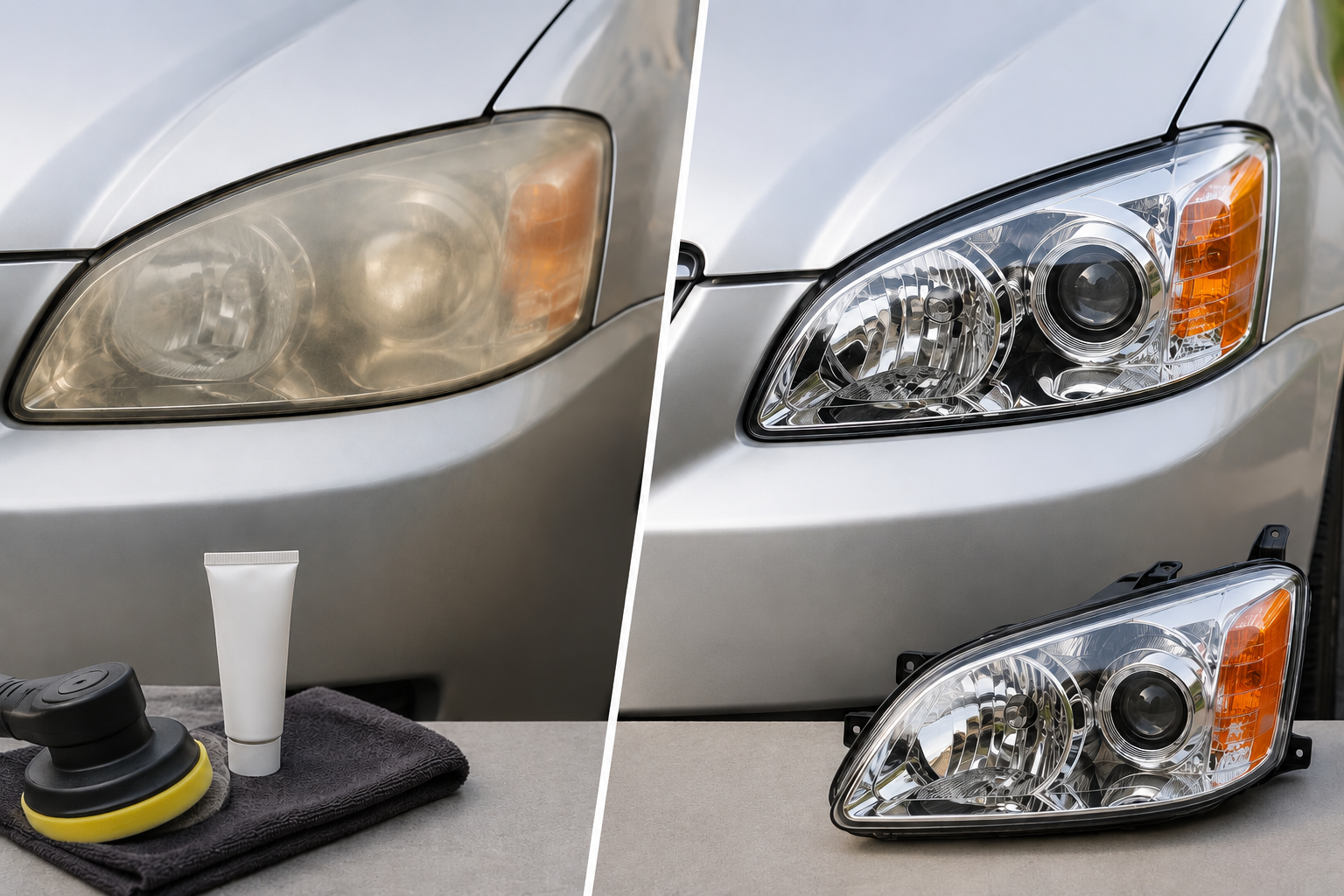
Understanding Headlight Restoration vs Headlight Replacement can help you make the right
choice based on your vehicle's condition, budget, and safety requirements. Both options have
their advantages, but the ideal solution depends on the severity of the damage and your
long-term goals.
In this guide, we'll explore the differences between restoration and replacement, helping you
determine which option is better for your car.
Why Headlights Become Cloudy or Damaged
Before deciding between restoration and replacement, it's important to understand why
headlights deteriorate.
Common causes include:
-
UV exposure from sunlight
-
Oxidation of the plastic lens
-
Road debris and stone chips
-
Dirt and chemical contaminants
-
-
Improper cleaning methods
Most modern headlights are made from polycarbonate plastic, which is durable but vulnerable to
oxidation over time. This often results in cloudy or yellowed lenses that reduce light output and
visibility.
What Is Headlight Restoration?
Headlight restoration is a process that removes oxidation, scratches, and surface imperfections
from the headlight lens.
A professional restoration service typically includes:
-
-
-
-
Applying UV protective coating
The goal is to restore clarity and improve light performance without replacing the entire
headlight assembly.
One of the main advantages of Headlight Restoration vs Headlight Replacement is
affordability. Restoration can significantly improve appearance and functionality at a fraction of
the replacement cost.
What Is Headlight Replacement?
Headlight replacement involves removing the existing headlight assembly and installing a
brand-new unit.
This option is typically recommended when:
-
The lens is severely cracked
-
Water has entered the housing
-
Internal components are damaged
-
Mounting brackets are broken
-
Restoration cannot restore adequate clarity
Although more expensive, replacement provides an entirely new headlight system with
maximum performance and longevity.
Headlight Restoration vs Headlight Replacement: Key Differences
When comparing Headlight Restoration vs Headlight Replacement, several factors should
be considered.
| Factor |
Restoration |
Replacement |
| Cost |
Lower |
Higher |
| Time Required |
30–90 Minutes |
1–3 Hours |
| Appearance Improvement |
Significant |
Complete Renewal |
| Light Output Improvement |
Moderate to High |
Maximum |
| Lifespan |
Several Years |
Long-Term Solution |
| Best For |
Oxidation & Minor Damage |
Severe Damage |
Understanding these differences helps vehicle owners choose the most practical solution for
their situation.
Cost Comparison
Cost is often the biggest factor when evaluating Headlight Restoration vs Headlight
Replacement.
Restoration Costs
Professional restoration is generally much more affordable and can restore visibility effectively if
the damage is limited to surface oxidation.
Benefits include:
-
-
-
Immediate visual improvement
Replacement Costs
Replacement costs vary depending on:
-
-
-
Advanced lighting technology
-
Luxury vehicles and cars equipped with LED or adaptive headlights often have significantly
higher replacement costs.
Performance and Safety Considerations
Headlight clarity directly affects road safety.
Cloudy headlights can:
-
Reduce nighttime visibility
-
Increase glare for other drivers
-
Make obstacles harder to see
-
A key consideration in Headlight Restoration vs Headlight Replacement is whether
restoration can adequately restore light output.
If the lens damage is only external, restoration can dramatically improve performance. However,
if internal components are compromised, replacement is usually the safer option.
When Should You Choose Restoration?
Headlight restoration is often the best choice when:
-
Mild to Moderate Oxidation
Cloudy or yellowed lenses caused by UV exposure are ideal candidates for restoration.
-
Surface Scratches
Minor scratches can usually be removed through sanding and polishing.
-
Budget-Friendly Repairs
If you're looking for a cost-effective solution, restoration can deliver excellent results without
major expense.
For many drivers, Headlight Restoration vs Headlight Replacement favors restoration when
the damage is cosmetic rather than structural.
When Should You Choose Replacement?
Replacement becomes necessary under certain conditions.
-
Cracked Lenses
Cracks allow moisture and contaminants to enter the housing.
-
Water Damage
Minor scratches can usually be removed through sanding and polishing.
-
Internal Reflector Damage
If internal components have deteriorated, restoration will not solve the problem.
-
Severe Impact Damage
Broken housings or mounting points generally require complete replacement.
In these situations, Headlight Restoration vs Headlight Replacement clearly favors
replacement for safety and reliability.
Conclusion
Choosing between Headlight Restoration vs Headlight Replacement depends on the
condition of your vehicle's headlights. Restoration is often the ideal solution for oxidation,
discoloration, and minor surface damage, offering excellent results at a lower cost.
Replacement, on the other hand, is recommended when headlights suffer from cracks, water
intrusion, or internal component failure.
By evaluating the severity of the damage and considering your budget, you can make an
informed decision that improves both safety and vehicle appearance. Consulting a professional
technician is the best way to determine which option is right for your specific vehicle.
5 Frequently Asked Questions — Car Wraps and Custom Styling
Is headlight restoration worth it?
Yes. If the headlights are cloudy or oxidized but not structurally damaged, restoration can
significantly improve appearance and visibility at a lower cost than replacement.
How long does headlight restoration last?
Professional restoration can last several years, especially when a UV protective coating is
applied after the process.
When should headlights be replaced instead of restored?
Headlights should be replaced when they are cracked, leaking moisture, have damaged internal
components, or cannot be adequately restored.
Does headlight restoration improve visibility?
Yes. Removing oxidation and cloudiness allows more light to pass through the lens, improving
nighttime visibility and overall driving safety.
Which is more cost-effective: restoration or replacement?
For mild to moderate oxidation and surface damage, restoration is generally the more
cost-effective option. Replacement is better suited for severe or structural damage.