How UV Rays Affect Your Car Seats, Dashboard and Interior
Your car may look spotless on the outside, but what happens to its interior when it sits under the sun for hours? Continuous sunlight exposure can gradually fade upholstery, weaken dashboard materials, and reduce the overall appeal of your cabin.
In a city like Bangalore, where vehicles frequently face direct sunlight and rising temperatures, protecting your car's interior becomes essential.
Installing 3M Sun Control Film can help reduce ultraviolet (UV) exposure and solar heat entering through the windows, preserving interior materials while creating a more comfortable driving environment.
Understanding How UV Rays Affect Your Car's Interior
Sunlight contains ultraviolet radiation that can gradually damage materials inside your vehicle.
Two important types of UV radiation are UVA and UVB. While automotive glass blocks much of the UVB radiation, the amount of UVA transmitted depends on the glass type and window construction.
When sunlight repeatedly reaches leather, fabric, vinyl, and plastic surfaces, it can contribute to colour fading and material deterioration.
Heat and visible sunlight also influence how quickly interiors age.
This is where 3M Sun Control Film becomes useful, as suitable automotive window films help reduce UV exposure and solar heat transmission through vehicle glass.
How UV Rays Damage Different Parts of Your Car
1. Car Seats - Fading, Dryness and Premature Aging
Your car seats are among the most exposed interior components, particularly when parked outdoors.
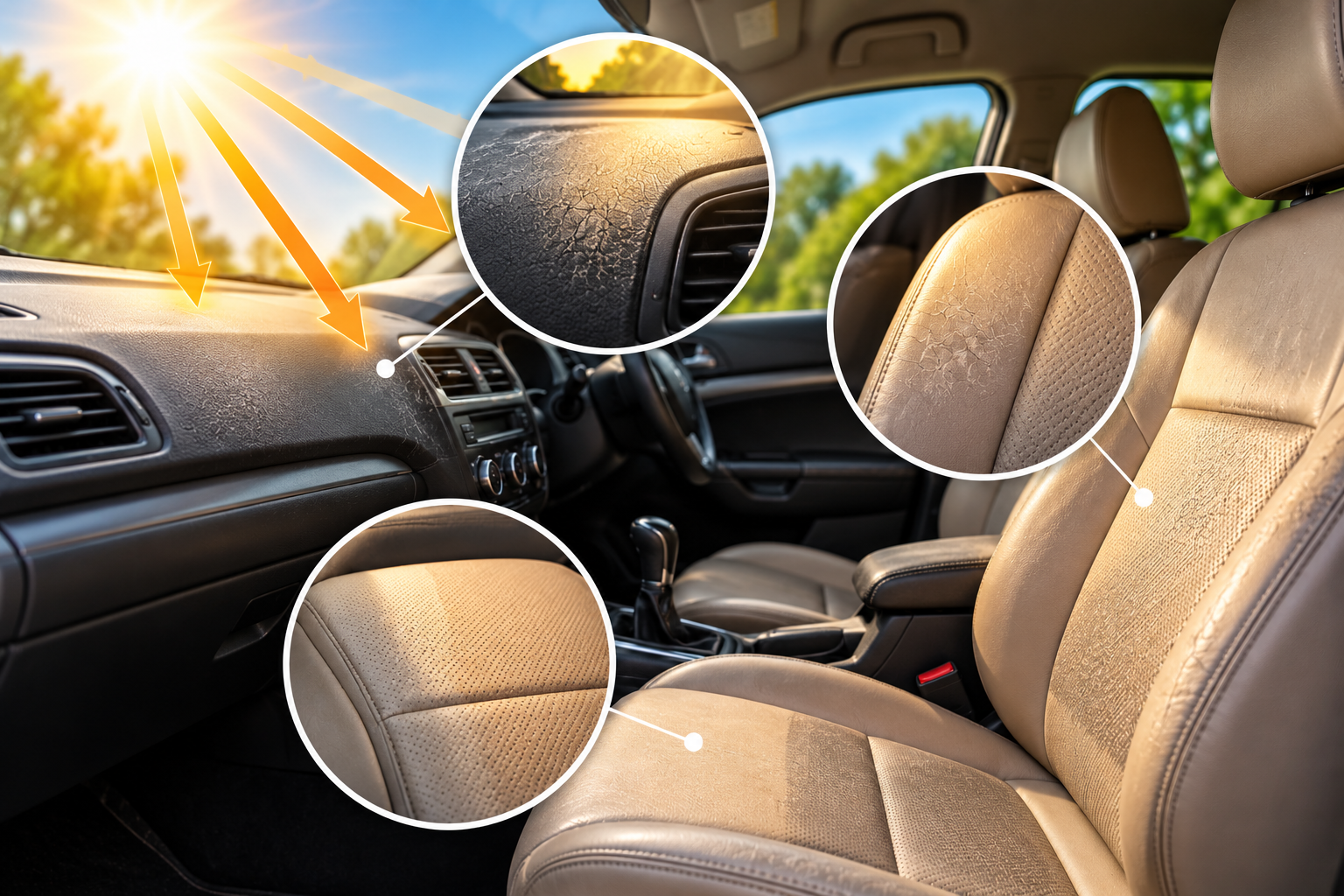
Leather seats may gradually lose their natural appearance, become dry, and develop cracks due to repeated sunlight and heat exposure.
Fabric seats can also experience fading, especially in areas receiving direct sunlight through side windows.
Over time, these changes can make even a well-maintained vehicle appear older.
Using UV Protection Film for Cars, along with regular upholstery maintenance, can help minimize exposure and preserve your seats' appearance.
2. Dashboard - Discolouration and Surface Cracking
The dashboard receives substantial sunlight through the windshield, making it particularly vulnerable to prolonged exposure.
High cabin temperatures and UV radiation may gradually affect dashboard plastics and vinyl surfaces.
Common warning signs include fading, discolouration, dryness, and small surface cracks.
Dark dashboards can become especially hot when parked under direct sunlight.
Installing 3M Sun Control Film, where permitted and compatible with the vehicle, can help reduce UV transmission and the solar heat entering the cabin.
3. Door Panels and Plastic Trims - Loss of Colour and Finish
Door panels, centre consoles, and plastic trims play an important role in maintaining your vehicle's interior appearance.
Repeated UV exposure may cause these surfaces to lose their original colour and finish.
Some materials become brittle over time, while others develop an uneven or faded appearance.
This deterioration is often gradual, making it easy to overlook until noticeable damage occurs.
Regular cleaning, suitable interior protectants, and limiting direct sunlight exposure can help extend the appearance of these components.
4. Steering Wheel and Interior Accessories - Everyday Wear
Steering wheels, armrests, and interior accessories are frequently exposed to sunlight and everyday handling.
UV exposure and heat can accelerate material ageing, while oils, sweat, and friction contribute to surface wear.
Leather-wrapped steering wheels may develop dryness, and certain plastic accessories can become discoloured.
Protecting these frequently used areas helps maintain cabin aesthetics and everyday driving comfort.
Why Car Interiors Become Extremely Hot Under Sunlight
Have you ever entered a parked car and immediately felt uncomfortable because of the intense heat?
Sunlight passes through vehicle windows and warms seats, dashboards, and other interior surfaces.
These surfaces release heat into the cabin, causing the internal temperature to rise.
Even on moderately warm days, a parked vehicle can become significantly hotter than the surrounding environment.
Prolonged heat exposure can accelerate the ageing of interior materials.
Using 3M Sun Control Film can help reduce solar heat entering through suitable windows, improving comfort when combined with practical measures such as shaded parking and ventilation.
However, window films do not prevent parked vehicles from becoming dangerously hot.
How 3M Sun Control Film Helps Protect Your Vehicle
Modern automotive window films are designed to manage sunlight while supporting driving comfort.
Unlike ordinary decorative tinting, quality sun control films offer performance features that address UV radiation, solar heat, and glare.
1. Reduces Harmful UV Exposure
Selected 3M automotive window film products can block up to 99.9% of UV rays, depending on the product series.
This helps limit UV exposure to interior materials and may reduce premature fading.
2. Supports Heat Reduction Inside the Cabin
Car Heat Reduction Film helps reject a portion of the sun's energy entering through vehicle windows.
This can make driving more comfortable during sunny conditions, although performance varies by film, glass type, and installation.
3. Helps Reduce Uncomfortable Glare
Bright sunlight can create uncomfortable reflections while driving.
Appropriate Automotive Window Film can reduce glare and improve visual comfort without unnecessarily compromising visibility when a suitable, legally compliant product is selected.
4. Helps Preserve Interior Appearance
By reducing incoming UV radiation, 3M Sun Control Film can help protect suitable upholstery, dashboard materials, and interior trims from sunlight-related fading.
It is a preventive solution rather than a treatment that reverses existing damage.
3M offers automotive film ranges with different heat rejection, UV protection, and visible light transmission characteristics, so product selection matters.
Simple Ways to Protect Your Car Interior From Sun Damage
Along with professional sun protection solutions, small maintenance habits can make a meaningful difference.
- Park in shaded areas: Whenever possible, choose covered parking spaces to reduce direct sunlight exposure.
- Use a windshield sunshade: A properly fitted sunshade can reduce direct sunlight falling on the dashboard while parked.
- Clean interior surfaces regularly: Remove dust and contaminants using products suitable for the specific material.
- Condition leather surfaces: Use manufacturer-recommended leather care products to maintain flexibility and appearance.
- Avoid harsh cleaning chemicals: Strong chemicals can damage protective coatings and accelerate interior wear.
Combining these practices with 3M Sun Control Film can provide a more comprehensive approach to preserving your vehicle's interior.
Why Choose 3M Car Care Studio in Bangalore?
Selecting the right sun protection solution requires understanding your vehicle's glass, driving conditions, and comfort expectations.
3M Car Care Studio offers Car Sun Control Film in Bangalore, along with additional vehicle care solutions.
Customers can explore services at the Nagasandra and Kanakapura Road locations.
The studio also offers car interior care services, making it convenient to discuss both sunlight protection and interior maintenance needs.
Before selecting a film, confirm the specific product's specifications, warranty, glass compatibility, and applicable Indian vehicle glazing regulations.
A suitable 3M Sun Control Film solution should balance sunlight protection, visibility, and regulatory compliance.
Conclusion
Sunlight exposure can gradually affect your vehicle's seats, dashboard, plastic trims, and interior accessories.
Although these changes may not be immediately noticeable, repeated exposure to UV radiation and heat can contribute to fading, cracking, and premature material ageing.
Preventive care, regular cleaning, shaded parking, and appropriate automotive window films can help maintain your car's interior appearance.
Want to protect your car's interior from everyday sunlight exposure?
Explore 3M Sun Control Film options at 3M Car Care Studio in Bangalore. Contact the Nagasandra or Kanakapura Road studio to discuss available films, their performance, and suitability for your vehicle.
Frequently Asked Questions (FAQs)
1. Can UV rays damage leather car seats?
Yes. Prolonged UV exposure, combined with heat, can contribute to leather discolouration, dryness, and premature ageing.
2. Does sunlight cause dashboard cracks?
Yes. Repeated sunlight and high temperatures can gradually weaken certain dashboard materials, contributing to fading and cracking.
3. Can car sun control films prevent interior fading?
Quality sun control films reduce UV transmission, which can help slow sunlight-related fading. However, they cannot eliminate all causes of interior ageing.
4. Do sun control films reduce heat inside cars?
Yes. Suitable automotive window films reject a portion of incoming solar energy, helping improve cabin comfort during sunny weather.
5. How much UV radiation can 3M automotive window films block?
Selected 3M automotive window films can block up to 99.9% of UV radiation. Actual performance depends on the film series and specifications.
6. Can I protect my car interior without window films?
Yes. Shaded parking, windshield sunshades, suitable interior cleaning products, and regular upholstery care can reduce sunlight-related deterioration.
7. Are car sun control films legal in Bangalore?
Vehicle window film use is subject to Indian glazing and visibility regulations. Confirm the current legal requirements and approved options before installation.
8. Where can I enquire about car sun control film in Bangalore?
You can contact 3M Car Care Studio at Nagasandra or Kanakapura Road to enquire about available automotive sun control solutions, product specifications, and installation.