Can 3M Paint Protection Film (PPF) Be Installed on a Repainted Car?
Paint Protection Film is commonly chosen by car owners who want an additional layer of protection against everyday environmental and road-related damage. But what happens when a car has already been repainted? Can PPF still be applied safely?
In many cases, PPF Installation for Cars can be considered on repainted panels, but the condition and quality of the repaint are extremely important. A repainted surface needs to be properly cured, stable, smooth and professionally inspected before film application.
3M itself notes that poorly cured resprays can be more vulnerable and recommends consulting the installer when a vehicle has undergone a respray. This makes professional assessment particularly important before proceeding with PPF on repainted surfaces.
Why Is Repainted Car Paint Different?
Factory paint is applied through a controlled manufacturing process involving surface preparation, multiple coating stages and controlled curing. Repainting is performed later at a body shop or repair facility, so the final quality can vary depending on the materials, preparation and application process.
A professionally repainted panel can achieve an excellent finish. However, issues may occur when paint preparation is poor or when primer, base coat and clear coat have not bonded correctly.
This matters because PPF uses an adhesive system designed to bond to the painted surface. If the underlying paint itself has poor adhesion, problems may occur during installation or eventual film removal.
Can 3M PPF Be Applied Over Repainted Panels?
Yes, applying PPF over repainted panels may be possible, provided the paint is in suitable condition.
Before PPF Installation for Cars, the installer should know which panels have been repainted and examine their condition. The inspection can help determine whether the surface appears suitable for film application.
The important factor is not simply whether the car has been repainted. The quality, condition and curing of that repaint are what matter.
A high-quality, fully cured repaint is very different from paint that is still soft, peeling, bubbling or poorly bonded to the underlying panel.
Why Paint Curing Is Important Before PPF
Fresh automotive paint requires time to cure. Applying film before the repaint has adequately cured can create unnecessary risk.
The exact curing requirement can vary depending on the paint system, repair process and paint manufacturer's recommendations. For this reason, car owners should not assume a universal waiting period.
If a panel has recently been painted, it is better to confirm its curing requirements with the body shop or paint manufacturer and inform the PPF installer about the repaint.
Professional inspection before PPF Installation for Cars can help determine whether additional waiting time or surface preparation may be required.
What Should Be Checked Before Installing PPF?
The condition of the repainted surface should be assessed carefully.
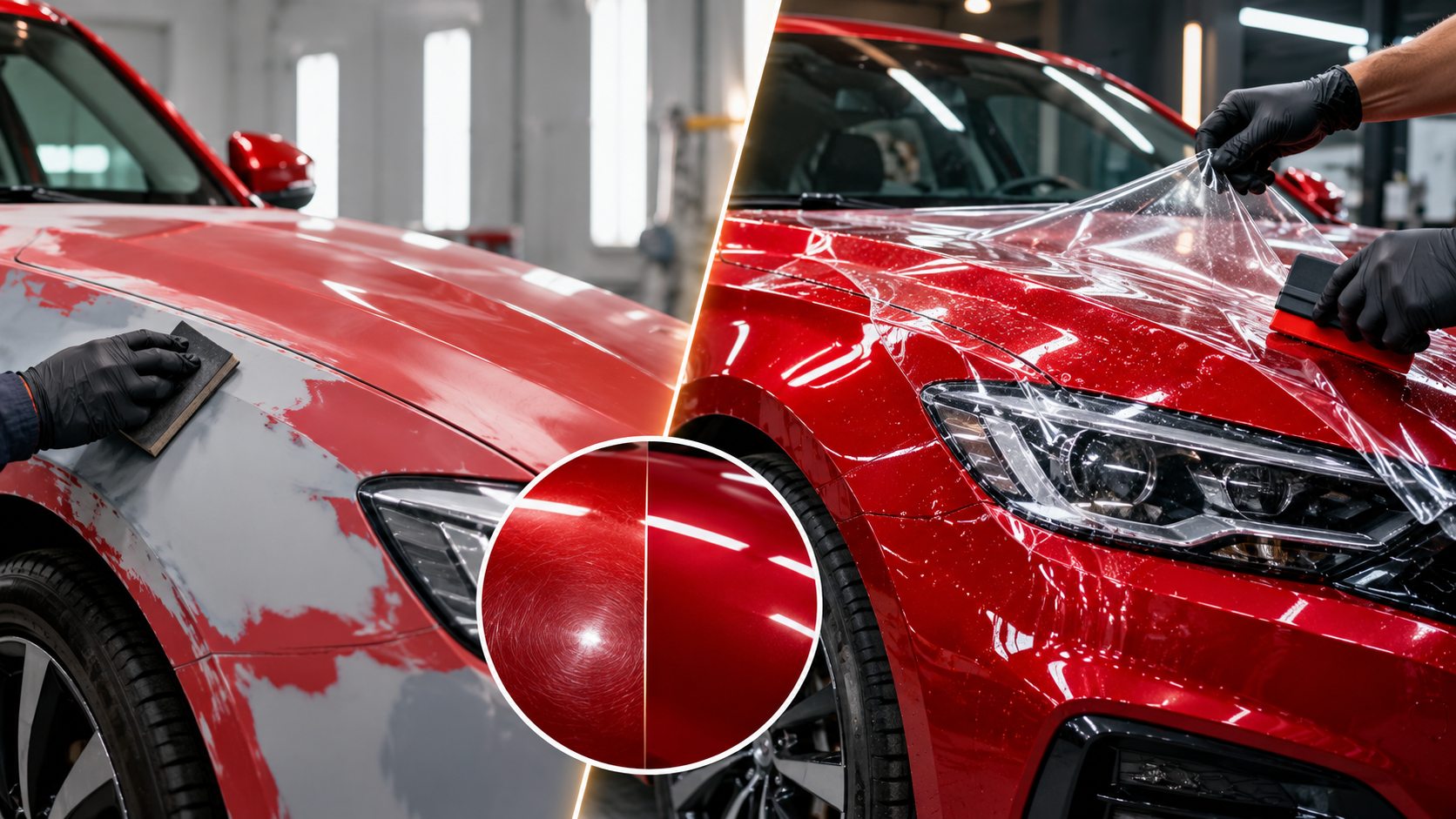
The installer should look for visible problems such as peeling paint, bubbles, rough areas, surface contamination or an inconsistent clear coat. Scratches and other defects that may remain visible beneath transparent PPF should also be addressed where appropriate.
3M's installation guidance places considerable emphasis on surface preparation. Its instructions call for removing residues such as wax, tar and paint sealant, using appropriate cleaning procedures, removing surface contaminants with detailing clay, and performing a final inspection before installation.
This preparation helps create a clean surface for film application.
Why Surface Preparation Matters
Even high-quality PPF cannot compensate for an improperly prepared painted surface.
Before PPF Installation for Cars, contaminants such as wax, tar, sealants and dirt need to be removed appropriately. The surface should also be inspected for defects that could affect the finished appearance.
3M's current PPF installation guidelines also state that ceramic coating should not remain on the vehicle paint before installation. Where a ceramic coating is present, 3M recommends working with an authorised paint-correction specialist or automotive detailer to remove it.
Proper preparation allows the installer to work with the actual painted surface rather than contaminants or coatings sitting above it.
Will PPF Hide Repaint Imperfections?
This is an important expectation to clarify before installation.
PPF is designed primarily to protect the painted surface. It should not be treated as a solution for correcting poor-quality paintwork.
Deep scratches, uneven paint, dust particles trapped in the repaint, peeling clear coat and other visible defects may remain noticeable after transparent film is applied.
If the repainted surface has imperfections, paint correction or refinishing may be necessary before PPF is considered.
A clean and properly finished surface generally provides a better foundation for the final installation.
Can Removing PPF Damage Repainted Paint?
The condition of the underlying paint can influence what happens when PPF is eventually removed.
3M recommends professional removal and specifically cautions that poorly cured resprays are more vulnerable. This is one reason why the history and condition of a repainted panel should be discussed before installation.
If the repaint has poor adhesion to the panel beneath it, the weakness exists in the paint system itself. Film removal can potentially expose that underlying problem.
Choosing professional PPF Installation for Cars is therefore important not only for the initial application but also for understanding future maintenance and removal requirements.
Is PPF Worth Considering After Car Repainting?
For a properly repainted and suitable surface, PPF can be considered as part of a vehicle protection strategy.
Repainted panels can still encounter environmental contamination and everyday road exposure after leaving the body shop. Protecting the surface may be particularly relevant when a car owner has invested significantly in restoring its appearance.
However, the decision should be based on the actual condition of the repaint rather than simply assuming that every newly painted panel is ready for film.
An experienced installer should inspect the vehicle and discuss any concerns before application begins.
Why Professional PPF Installation Matters
PPF application requires controlled preparation, suitable installation conditions and correct techniques around curves, edges and complex body panels.
3M recommends trained and experienced installers for its paint protection films. Its installation guidelines also specify surface-cleaning procedures and recommended application conditions.
Professional PPF Installation for Cars becomes even more important when dealing with repainted vehicles because the installer must evaluate both the film application and the condition of the underlying finish.
Informing the installer about previous bodywork or repainting can help them make a more informed assessment before beginning the process.
Caring for PPF After Installation
Proper care after installation can help maintain the film and its adhesion.
3M's current guidance recommends waiting at least 72 hours before washing a vehicle after PPF application. Hand washing and touchless washing are preferred, while aggressive pressure washing around film edges should be avoided.
Car owners should also regularly inspect the film for lifting or damage.
The installer may provide additional care instructions depending on the specific film, coverage area and condition of the vehicle.
What Car Owners Should Remember
Having repainted panels does not automatically mean a vehicle cannot receive PPF. What matters is whether the repaint provides a suitable surface for installation.
Car owners should disclose previous repainting, allow sufficient curing based on the relevant paint system and have the surface professionally inspected.
A properly prepared surface can make a significant difference to the appearance and performance of PPF Installation for Cars, particularly when the vehicle has undergone previous bodywork.
Conclusion
So, can 3M Paint Protection Film be installed on a repainted car? In many cases, it may be possible, but the answer depends on the quality, condition and curing of the repaint.
A repainted panel with poor adhesion, peeling clear coat or insufficient curing requires attention before film installation is considered. Surface contamination and existing coatings also need to be addressed as part of preparation.
For this reason, professional assessment should come before PPF Installation for Cars on a repainted vehicle. By checking the paint condition, preparing the surface correctly and following appropriate installation procedures, car owners can make a more informed decision about protecting their repainted vehicle.
Frequently Asked Questions
1. Can PPF be installed immediately after repainting a car?
It is generally better not to apply PPF until the repaint has adequately cured. The required curing period can depend on the paint system and repair process, so confirm it with the body shop or paint manufacturer before installation.
2. Does PPF hide scratches or defects in repainted paint?
PPF is primarily a protective film rather than a paint-repair solution. Significant scratches, uneven finishes and other defects may remain visible underneath transparent film.
3. Can PPF removal pull off repainted paint?
There can be greater risk when a repaint is poorly cured or has weak adhesion. 3M specifically notes that poorly cured resprays are more vulnerable, which is why professional inspection and removal are important.
4. Should ceramic coating be removed before applying 3M PPF?
Yes. 3M's installation guidelines state that ceramic coating should not be present on the vehicle paint before PPF application and recommend professional removal where necessary.
5. How should a repainted car be prepared for PPF?
The painted surface should be fully cured and inspected for defects. Residues, contaminants and incompatible surface coatings should be appropriately removed before the film is installed.